The quick answer.
Choose an authentic high-endurance microSD card that meets your exact dash cam’s supported capacity, speed and compatibility requirements. A faster-looking label or larger capacity alone does not prove suitability for continuous loop recording. Back up important footage before formatting.
Compatibility comes before the brand shortlist
Start with the manual or current supported-card list for your exact camera. A recommendation for a different model can be a useful lead, but it is not a compatibility check. Look at capacity limits, the required speed class and any approved card families together. Garmin’s support guidance favours cards designed for dash-cam use because continuous overwriting is different from occasional file storage. We would make those requirements a purchase checklist rather than buy the largest card on sale.
Endurance and speed answer different questions
A card needs enough sustained write performance for the camera’s recording modes, but speed does not tell you everything about repeated overwriting. High-endurance cards are designed for this kind of workload. Read the card maker’s intended uses and warranty terms, then compare them with the camera requirements. A high advertised read speed is mainly useful for moving files; it is not, by itself, evidence that the card is a good match for continuous in-car recording.
Capacity is about the recording window
A bigger supported card can hold more footage before loop recording overwrites older files. How much more depends on recording bitrate, camera channels and settings. A front-and-rear kit writes a different combination of files from a front-only camera, so avoid importing a recording-time estimate from another setup. If you regularly need to retrieve footage after several journeys, capacity matters differently than it does for a driver who exports an important clip immediately.
Choose from the camera’s real limit
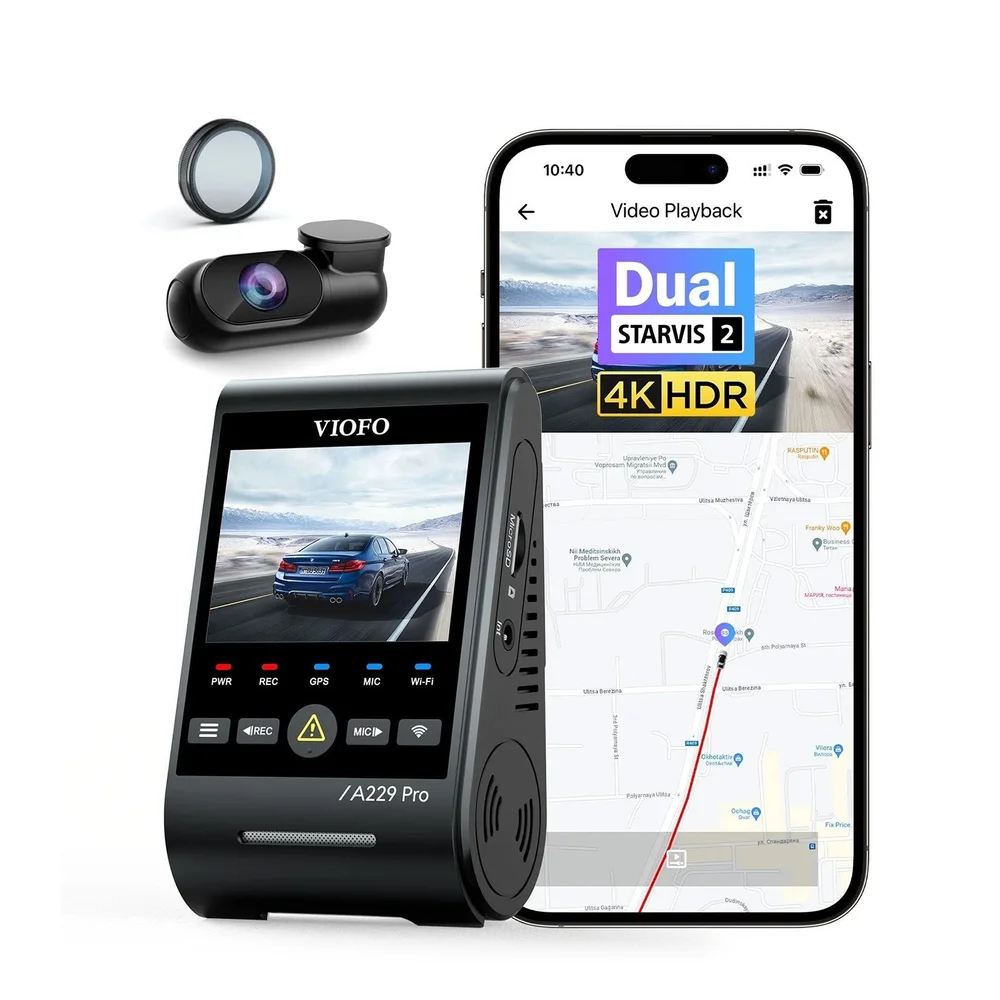
VIOFO’s A229 Pro 2CH specification lists microSD support up to 512GB. That is an example for that camera, not a universal dash-cam limit. A supported capacity is only the first filter: check the recommended card type and seller as well. We would rather buy a supported endurance card from a reliable source than gamble on an unusually cheap larger card with unclear origin. Keep the receipt and the exact card identification for troubleshooting.
Formatting is a maintenance task with a consequence
Formatting removes files. Export footage you need to keep before following the device’s formatting instructions. Use the camera’s recommended process rather than assume any computer format will be correct. Garmin’s guidance includes periodic formatting and eventual card replacement, but maintenance intervals should come from the documentation for your own device. A reminder to review sample recordings is useful too: check that both channels can be played back, not simply that the camera shows a recording icon.
Know when the problem is not a shopping decision
A card warning, repeated recording gaps or files that cannot be opened deserves attention. Save recoverable important files, then follow the camera maker’s troubleshooting steps. Do not continue relying on an unverified recording system because the memory card is recent. If the approved replacement works and the original does not, the difference is useful evidence. If multiple approved cards fail, the camera, power setup or settings may need investigation instead.
Keep building your know-how.
Your questions, answered.
Is any fast microSD card suitable for a dash cam?
No. Match the exact camera’s supported capacity and speed requirements, and choose a card intended for continuous dash-cam recording.
Will 512GB work in every dash cam?
No. It is within the listed limit for the A229 Pro 2CH, but other cameras can have different limits and supported-card lists.
Does formatting a dash-cam card delete recordings?
Yes. Back up important footage first and follow the camera’s formatting instructions.
Sources & further reading.
Source information checked October 21, 2026. Product examples are identified by model; the recommendations and practical comparisons are CarRundown’s editorial analysis.