The quick answer.
A 4K dash cam records a higher-resolution frame than a typical 2K model, which can leave more detail to examine. It does not guarantee readable plates in every scene. Compare exact-model sample footage, exposure, lens, HDR, camera channels and recording settings before choosing.
| Consideration | 2K dash cam | 4K dash cam |
|---|---|---|
| Resolution | Lower frame resolution in this comparison | Higher frame resolution in this comparison |
| Plate detail | Depends on the complete scene and camera | Potential for more detail, not a guarantee |
| Storage planning | Check actual bitrate and channels | Check actual bitrate and channels |
| Night footage | Review the exact sensor, exposure and settings | Do not assume resolution alone decides it |
| Best comparison | Matched clips from the intended setup | Matched clips from the intended setup |
Compare frames, not slogans
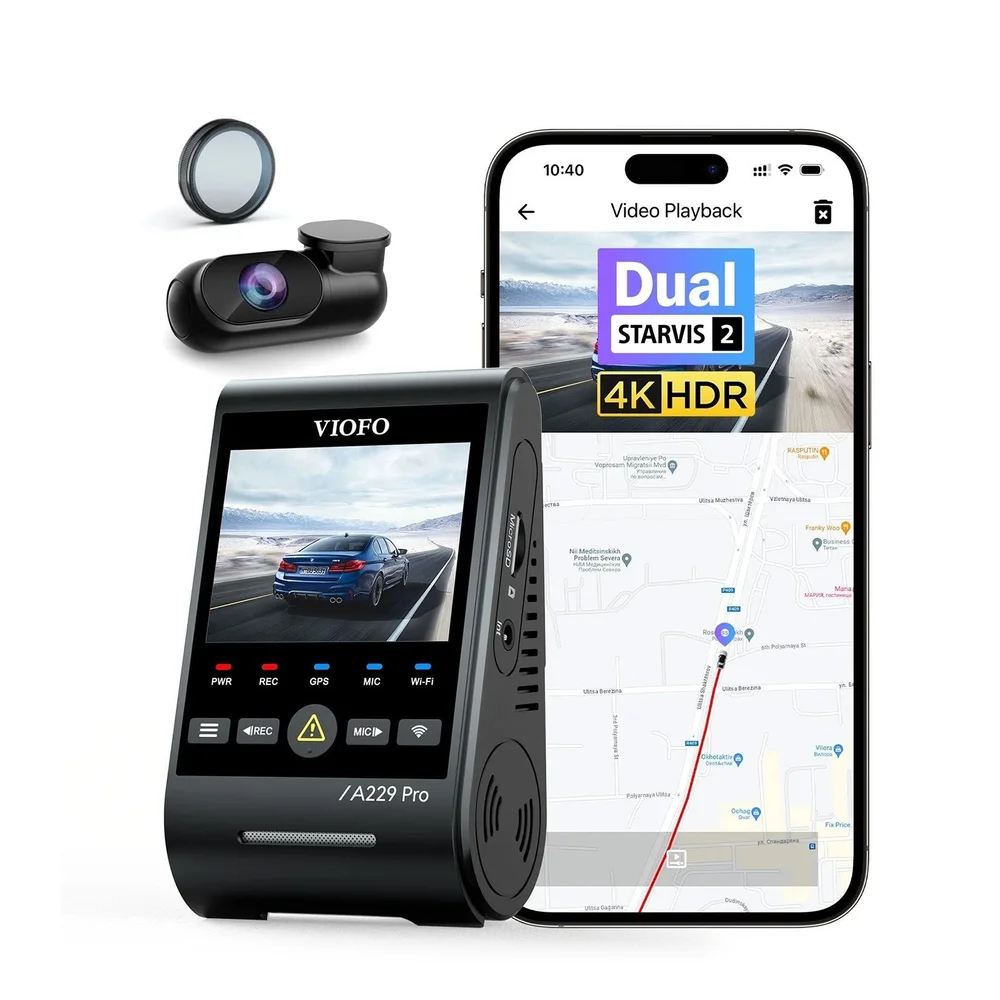
Labels such as 2K are used in product marketing, so check the actual dimensions rather than relying entirely on the name. VIOFO’s A229 Pro 2CH lists 3840 by 2160 front recording and 2560 by 1440 rear recording at its stated settings. Those are specifications for that kit. They do not tell you that the front and rear camera will reproduce every scene identically, or that every product using the same resolution label has the same performance.
More pixels cannot recover detail that was not captured clearly
A plate can be obscured by motion, reflections, distance or difficult lighting. A larger frame may offer useful detail, but it cannot turn an overexposed or blurred subject into a guaranteed identifier. We would compare ordinary scenes that resemble your driving rather than make a purchase from a single still frame. Look at daylight and darker clips, moving traffic and the camera’s actual position in the vehicle.
Check the selected mode and the whole kit
Resolution, frame rate, HDR and channel combinations may change together on a particular device. Confirm what the camera supports simultaneously. A front-and-rear product can advertise its front specification prominently while the rear camera uses another resolution. Likewise, a maximum frame rate may apply only to one selected mode. Read the specification table for the configuration you plan to use rather than combining the largest figures from separate lines.
Budget for the recording system you will maintain
A camera still needs suitable storage, power and an installation that gives it a useful view. Check the required card and do not assume a particular resolution always produces a fixed number of recording hours. Actual bitrate and camera channels matter. If a 4K kit leaves no budget for a supported card or suitable fitting, compare a complete alternative rather than regard the camera alone as the entire purchase.
Our take.
We would favour the camera that produces useful footage in the intended installation and fits the full-system budget. Use 4K as a feature to assess, not a substitute for exact-model evidence or a promise of plate capture.
Next: read the full buying guide for a closer look at fit and practical considerations.
Related reading.
Your questions, answered.
Does 4K guarantee readable license plates?
No. Motion, lighting, distance, exposure and the installation affect what the recording captures.
Does a 4K front-and-rear kit record 4K on both cameras?
Not necessarily. Check each channel. The A229 Pro 2CH example pairs 4K front with 2K rear recording.
Sources & further reading.
Source information checked October 21, 2026. Product examples are identified by model; the recommendations and practical comparisons are CarRundown’s editorial analysis.