The quick answer.
Choose a phone mount by finding a suitable location that preserves your view and access to controls, then matching the attachment to the vehicle and phone case. Dashboard adhesion, vent compatibility and wireless charging are separate checks. Test the position while parked before committing to an installation.
Location decides more than the product photograph
A mount can look tidy in a demonstration car and be awkward in yours. Sit in the normal driving position while parked and consider the screen position, your view, controls, airbags and cable route. The location should work with the vehicle rather than demand that you stretch or work around an obstruction. Check the applicable mounting requirements where you drive. We would choose a suitable location first, then shortlist the mounting approach that can actually use it.
Dashboard adhesion is a surface question
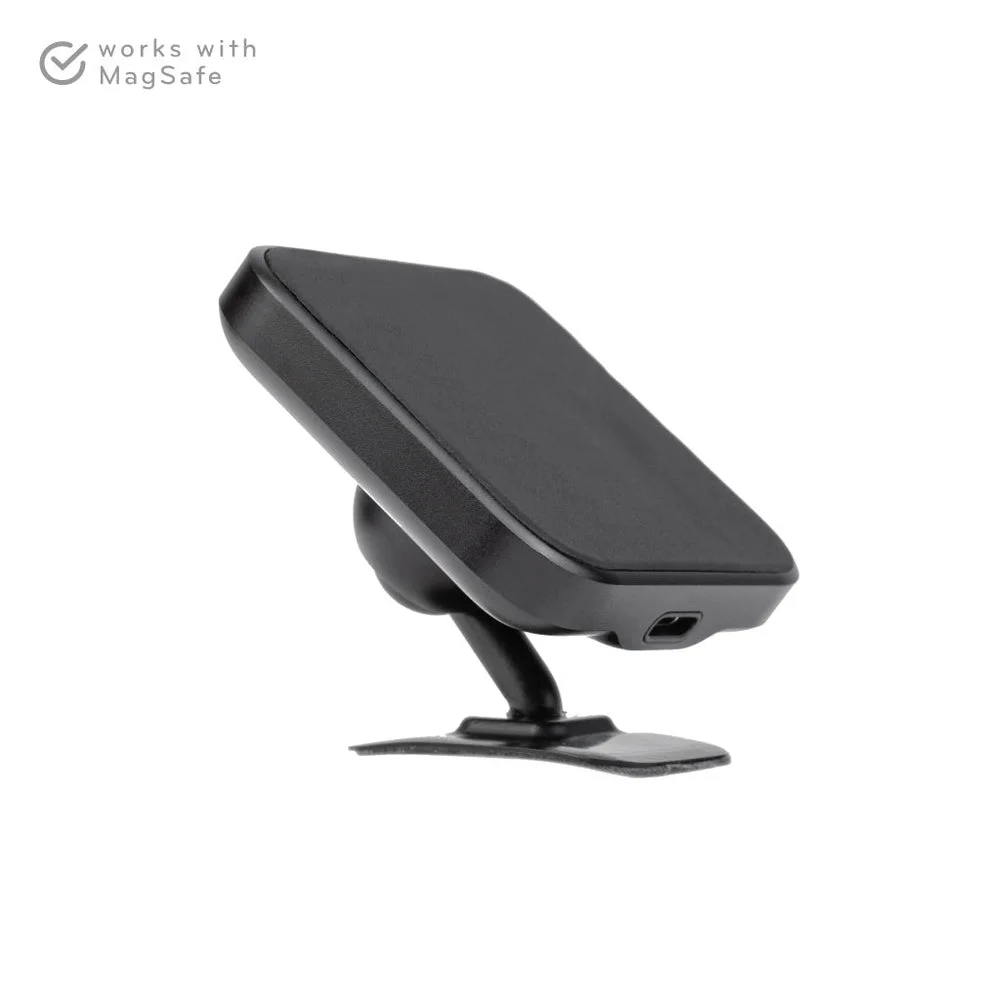
An adhesive base needs more than an empty patch of dashboard. Peak Design’s guidance calls attention to surface compatibility and warns that some soft-touch or leather surfaces may be unsuitable or damaged. Read the instructions for preparation and removal before committing to the location. A small footprint is not proof of compatibility. If you cannot establish a suitable surface, consider another supported approach instead of improvising stronger glue or stacking adapters.
A vent mount also needs a fit check
Different vehicles have different vent shapes, blade designs and available space. A vent-mount label does not establish fit for all of them. Read the mount’s dimensional and attachment requirements, then consider how it affects adjustment and airflow. Do not transfer another owner’s successful fit to a vent that only looks similar in a photograph. A mounting system that strains or obstructs the vehicle’s hardware is a poor match even if the phone attaches firmly.
Magnetic attachment and charging are separate capabilities
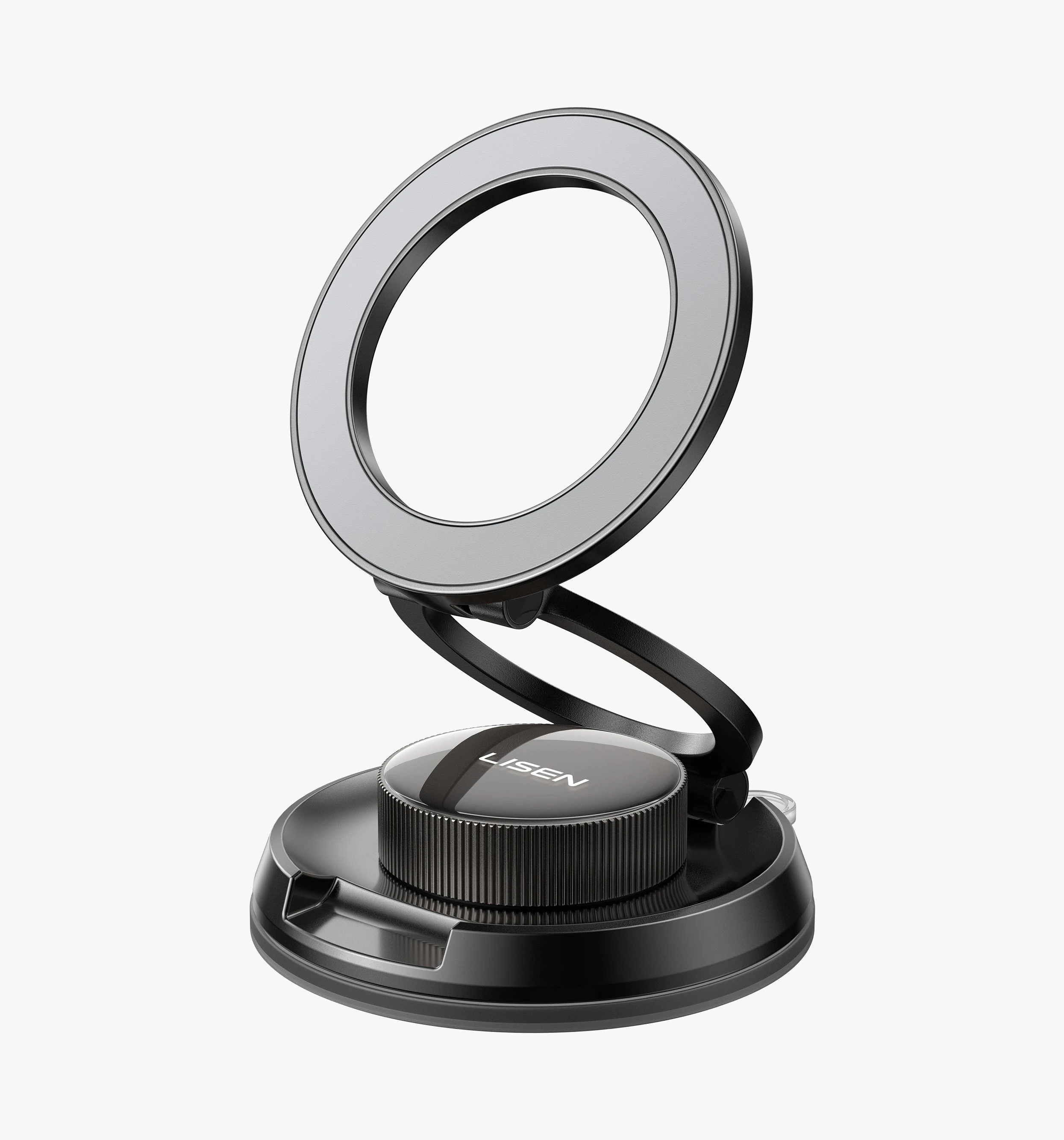
Confirm the phone and case combination supports the attachment system. Then check wireless-charging compatibility separately if charging is part of the purchase. A magnetic ring does not prove that the phone accepts the intended wireless charging, and a charging mount still needs a suitable power supply. We recommend identifying the exact phone, case, mount variant and included accessories together. This avoids paying for an extra feature that the rest of the setup cannot use.
Choose for the way the car is shared
Think about whether different phones, cases or drivers will use the mount. If the equipment moves between rental cars, an adhesive installation may create more inconvenience than it removes. If the mount stays with a daily driver, a well-planned fixed location can be appealing. Neither situation makes one attachment universally better. A useful comparison asks how the mount is attached, adjusted, powered and removed in the routine you actually have.
Verify the finished position while parked
Install and maintain the mount according to its instructions. Check that the phone can be attached in the intended orientation without blocking a control or creating a loose cable across the cabin. Adjust the position and set up navigation before moving. A mount is a place to hold a compatible device; it is not permission to interact with it while driving. If the final location does not work comfortably and safely, revisit the mounting approach rather than accept a poor position.
Keep building your know-how.
Explore relevant brands.
Compare the right equipment for the job, then check current offer details.
Your questions, answered.
Will a magnetic mount wirelessly charge every phone?
No. Attachment compatibility, phone and case support, charging capability and the power supply are separate checks.
Can an adhesive mount damage a dashboard?
It can be unsuitable for some surfaces. Check the manufacturer’s preparation, surface and removal guidance, particularly for leather and soft-touch materials.
Will every vent mount fit my vehicle?
No. Verify the mount’s stated vent geometry and attachment requirements against the exact vehicle.
Sources & further reading.
Source information checked October 21, 2026. Product examples are identified by model; the recommendations and practical comparisons are CarRundown’s editorial analysis.