The quick answer.
Build your car kit around communication, visibility, vehicle-specific equipment and the conditions of your trips. A compatible jump starter can be useful, but it belongs alongside accessible essentials and a plan for getting professional roadside help.
Build around your actual driving
A short city commute and a remote winter journey call for different preparation. Think about passengers, climate, route and how quickly assistance can reach you. Start with the vehicle’s manual and its supplied equipment, then fill meaningful gaps. More gear is not automatically a better kit if it is unfamiliar, inaccessible or incompatible with the car.
Keep the essentials accessible
A charged phone and a suitable charging cable are a practical starting point. Keep a reliable torch where you can reach it, rather than buried beneath luggage. Clothing appropriate to your conditions, drinking water for the trip and the contact details for roadside assistance make sense alongside vehicle equipment. Adjust the kit for your passengers and the trip instead of relying on a generic shopping list.
Choose battery equipment that matches the vehicle
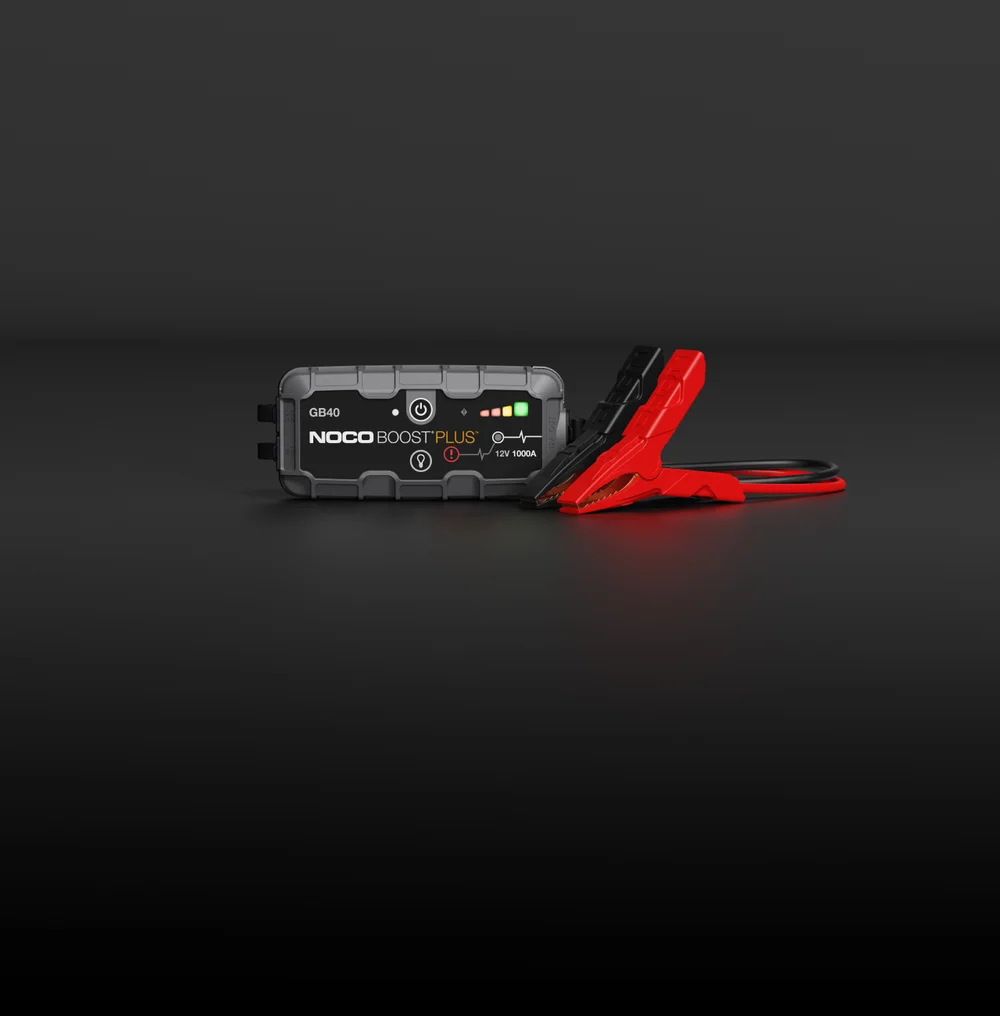
A jump starter is useful only when it suits the electrical system and engine application. NOCO lists the GB40 for compatible 12V systems, with gasoline engines up to 6.0L and diesel engines up to 3.0L. Those are manufacturer application ratings. Read the manual before you need it, follow your vehicle’s specified connection procedure and keep the unit charged according to its instructions.
Know what your car already provides
Check whether the car carries a spare wheel, a repair kit, locking-wheel-nut equipment or another manufacturer-supplied solution. Understand the limits of those items before a journey. Do not add a jack or repair product without understanding vehicle compatibility and safe use. If the location or situation is unsafe, professional assistance is the appropriate plan.
Review the kit with the seasons
Charge rechargeable equipment, replace exhausted batteries and check any dated supplies. Make sure additions are secured rather than loose in the cabin. A kit is preparation, not permission to attempt a repair beyond your equipment or experience. The most useful upgrade may be learning where the existing equipment is and how to contact help.
Your questions, answered.
Is a jump starter enough for an emergency kit?
No. It performs one specific task. Build around communication, visibility, your vehicle’s equipment, trip conditions and access to assistance.
How often should I check the kit?
Follow the maintenance instructions for each item and review the kit before long trips and changes of season.
Product references checked October 19, 2026. NOCO product information. Our editorial standards.